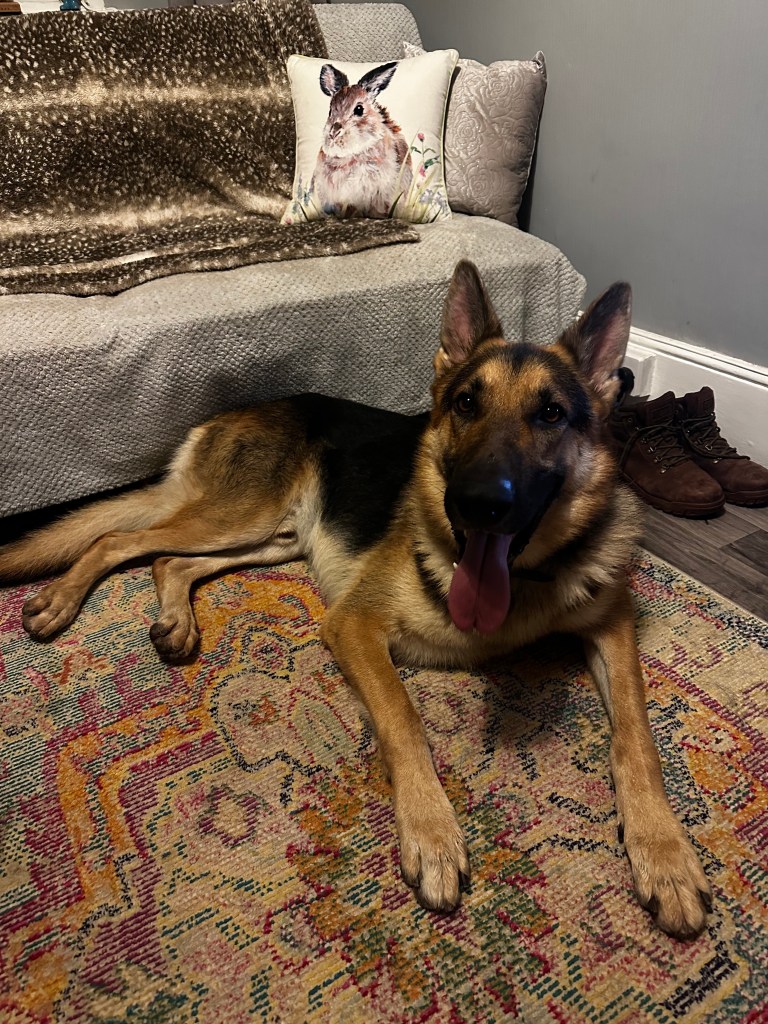
1 – Every dog is unique and needs to be treated as such
Behaviour, personality, likes & dislikes, energy levels, diet, habits, response to training, what motivates them, breed, breeding, socialisation, learning & experience
The better you know your dog, & your understand your dog the better your relationship with them will be
2 – Understand that breed has a significant influence on a dog – it’s behaviour, personality, it’s needs – work with them
10 core types of dog based on 10’s of thousands of years of human directed selective breeding – guardian, herding, sight, scent, gun, bull, companion, terrier, world, natural
3 – Exercise, diet, environment and routine are crucial to a dogs health and well being
Many behavioural (& health) issues can be related to these 3 areas.
Modern human lifestyles doesn’t always support dog welfare.
Exercise can be more than a simple walk
Diet can be easily and cheaply supplemented with veg and raw foods
4 – Dogs communicate all the time – learn to understand what your dog is telling you
Their body language – how they hold themselves, the position of their ears, their eyes, their tail, their mouths, every part of the dog is telling you something if you know how to read their body language!
5 – Dogs are watching and reading you all the time – so be aware what you are telling your dog
Just as your dog is communicating to you al the time, so they are watching and listening to you, your body language, your tone of voice, your words. Understand this, remember this and when you wonder why did they do that? Chances are its because they have been reading you and were following what they took to be your lead…
6 – Training is a non negotiable part of owning a dog
Every dog needs to be trained, whether it’s a 1.5 kg lapdog or a 100kg mastiff
Operant conditioning provides an effective framework for training and Positive Reinforcement is the most effective part when related to dog training.
Pain has no place in training your dog, but you do need to control and manage your dog for their and everyone’s benefit
7 – Dogs are not wolves, they are not descended from wolves, Dogs live in families not packs, there are parents but no alphas, no struggle for dominance!
Dogs like children growing up need rules, guidance, advocacy and of course education & training. But they don’t need to be dominated or tamed, there has been perhaps 40000 years of selective breeding to develop the partnership between human and dog
Some breeds will tend towards independence others towards dependency based on their original purpose – a herding dog will most likely have a strong drive to work with humans, a livestock guardian breed most likely will have far less need for human interaction
8 – Don’t judge your dog or it’s behaviour by human standards
Judging a dog by human standards sets the dog up to fail – dogs live in the moment, are driven by a different set of instincts and drives. They don’t know when to behave or when to play. They don’t plan, plot, seek revenge or behave like Disney characters – they are dogs and we should love and celebrate them for what they are!
9 – Find a good vet you trust and you and your dog can have a positive relationship with
There are many Vets to choose from, from large national organisations to single vet practices. There are no hard and fast rules, but your dog should be registered with a local vet in case they need treatment.
Choose a Vet that makes you and your dog(s) comfortable. Can you talk to them, do they make you feel reassured? What services can they offer, office hours or 24 hour coverage? Some Vets can offer almost every service available, others may link up with larger practices or Vet Hospitals. What are you happy with – don’t be afraid to ask ask questions.
10 – Know what the law says about your dog – You (or the person walking the dog) are responsible for the dog and it’s behaviour
Its highly recommend that you Insure your dog – public liability & vet cover.
Clear up after your dog & carer sufficient bags for this purpose
Keep your dog on a lead where required – no longer than 1 metre on pavements etc
Do not walk more than 6 dogs – the varies by District council 6 is the current maximum in Teignbridge
You dog is legally out of control if it injures someone or cause concerns that it might injure someone (or another animal inc another dog)
 D4Dog Walking, Training and Behaviour Support -Newton Abbot & TQ12
Leave a comment